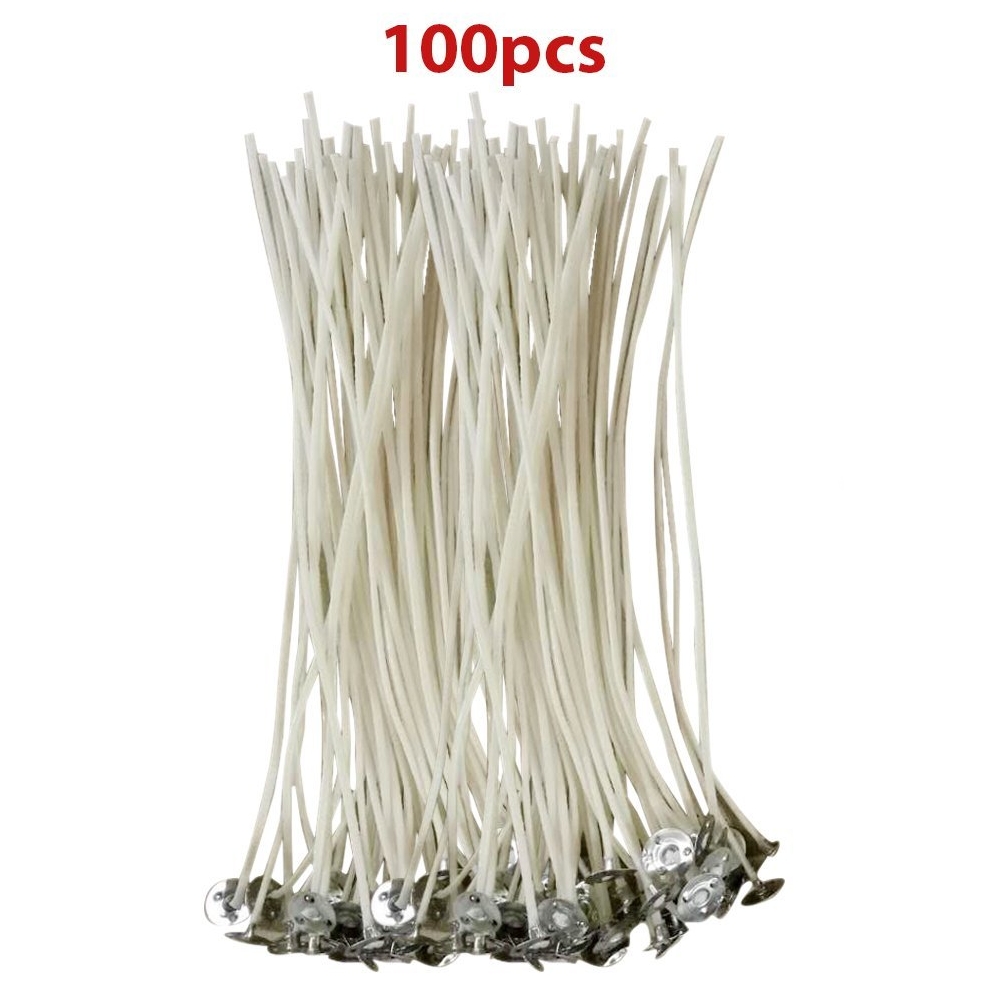
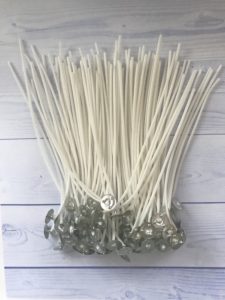
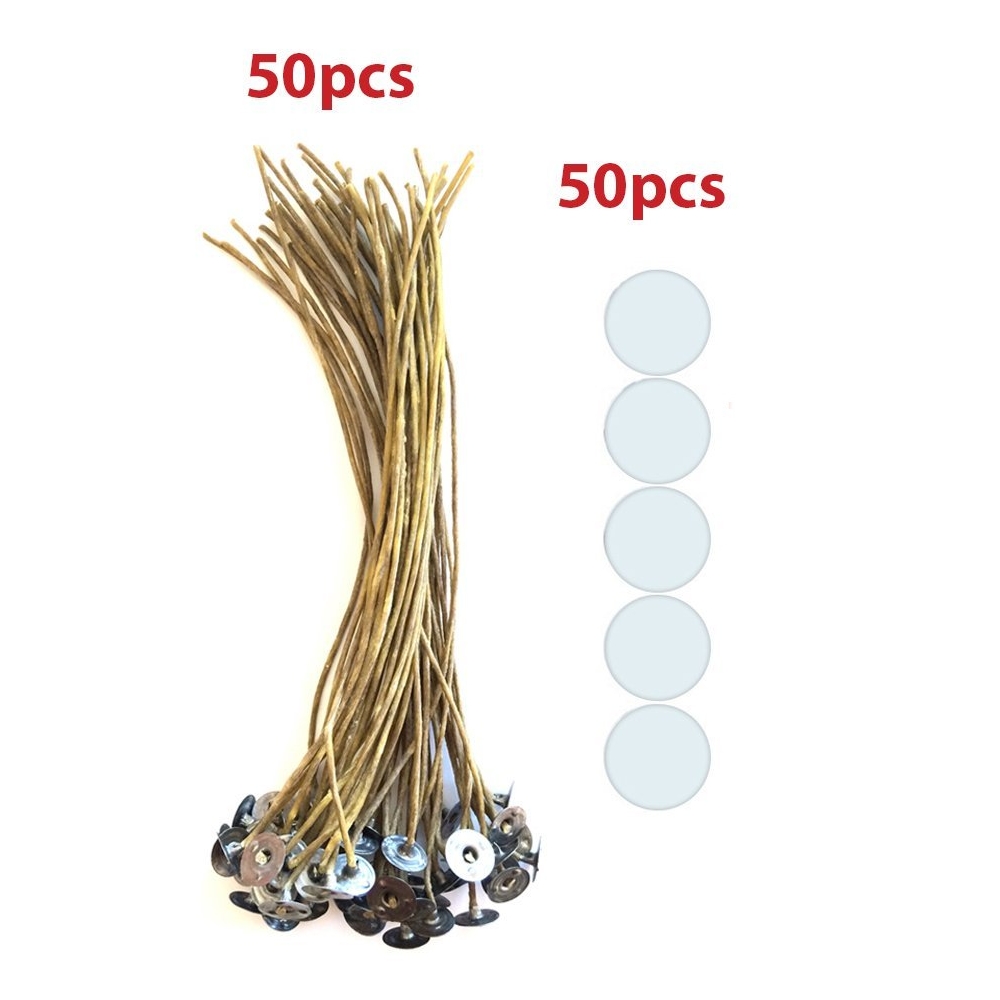
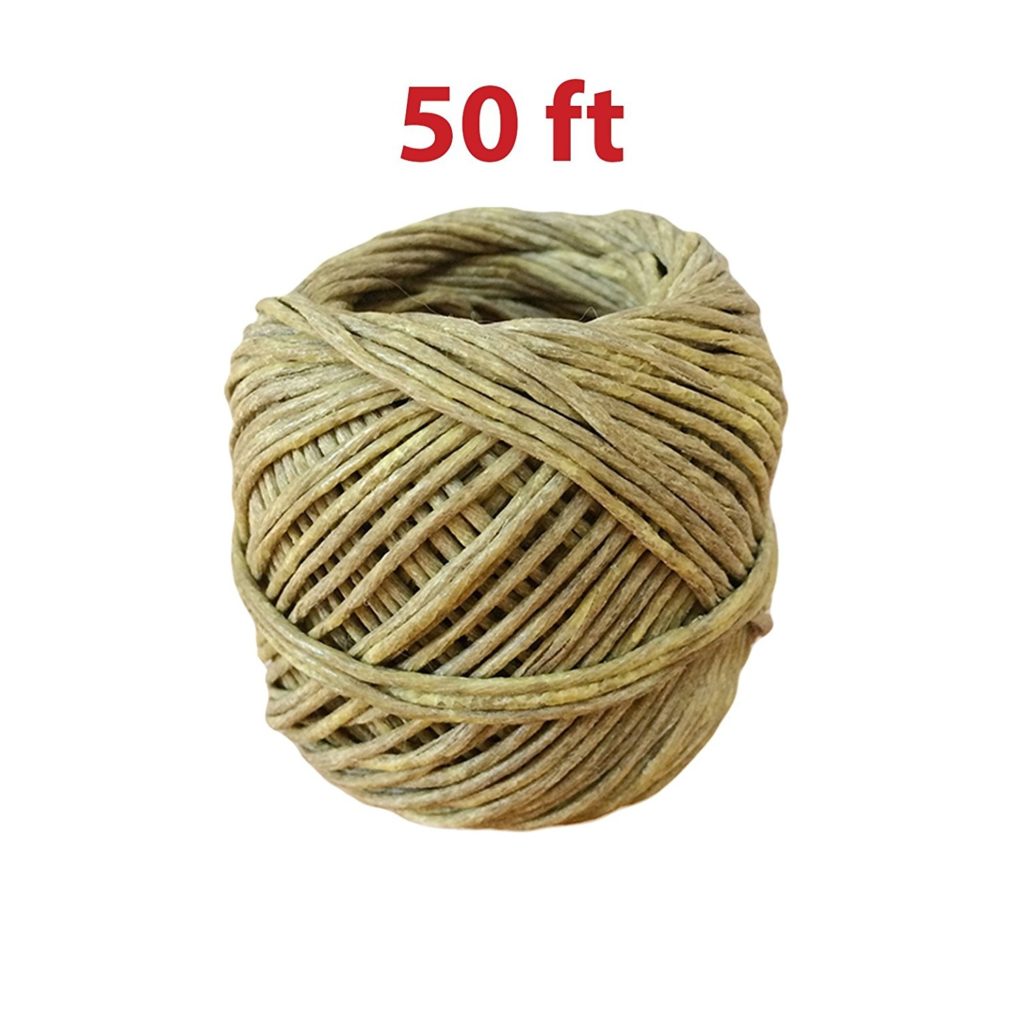
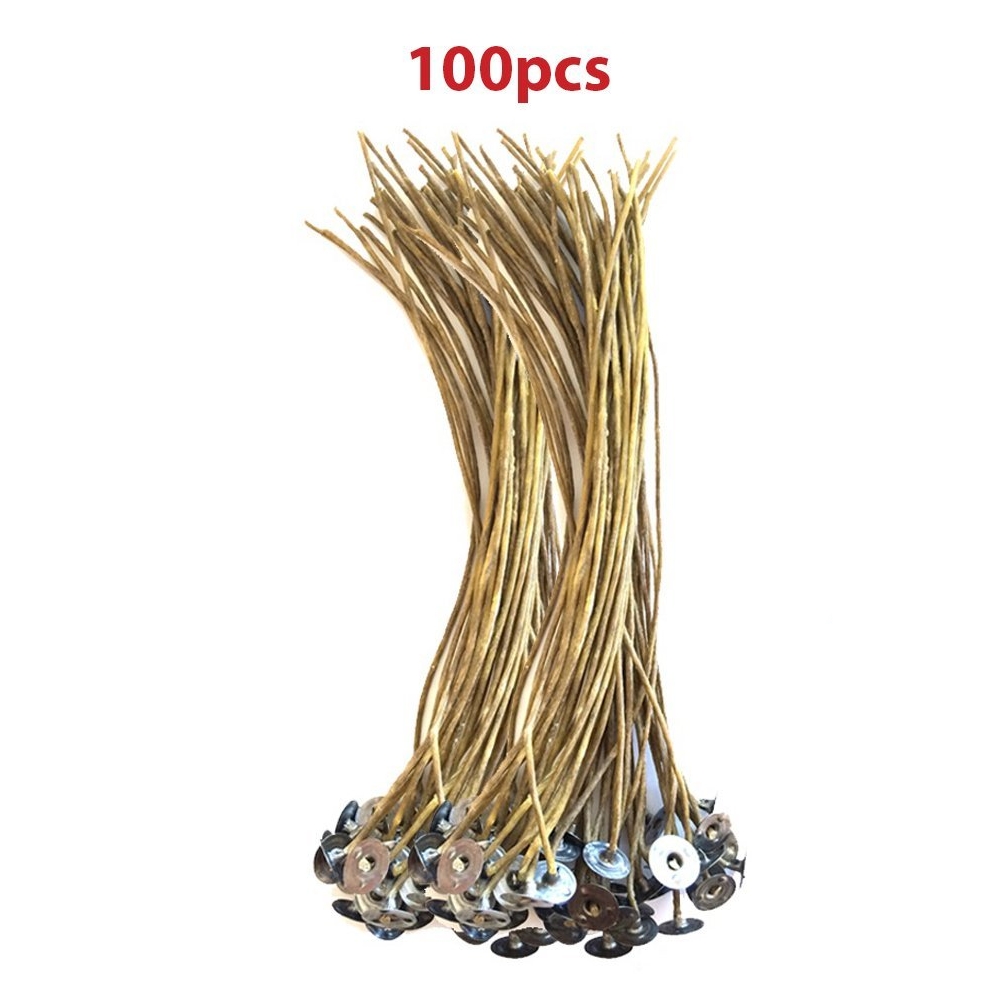
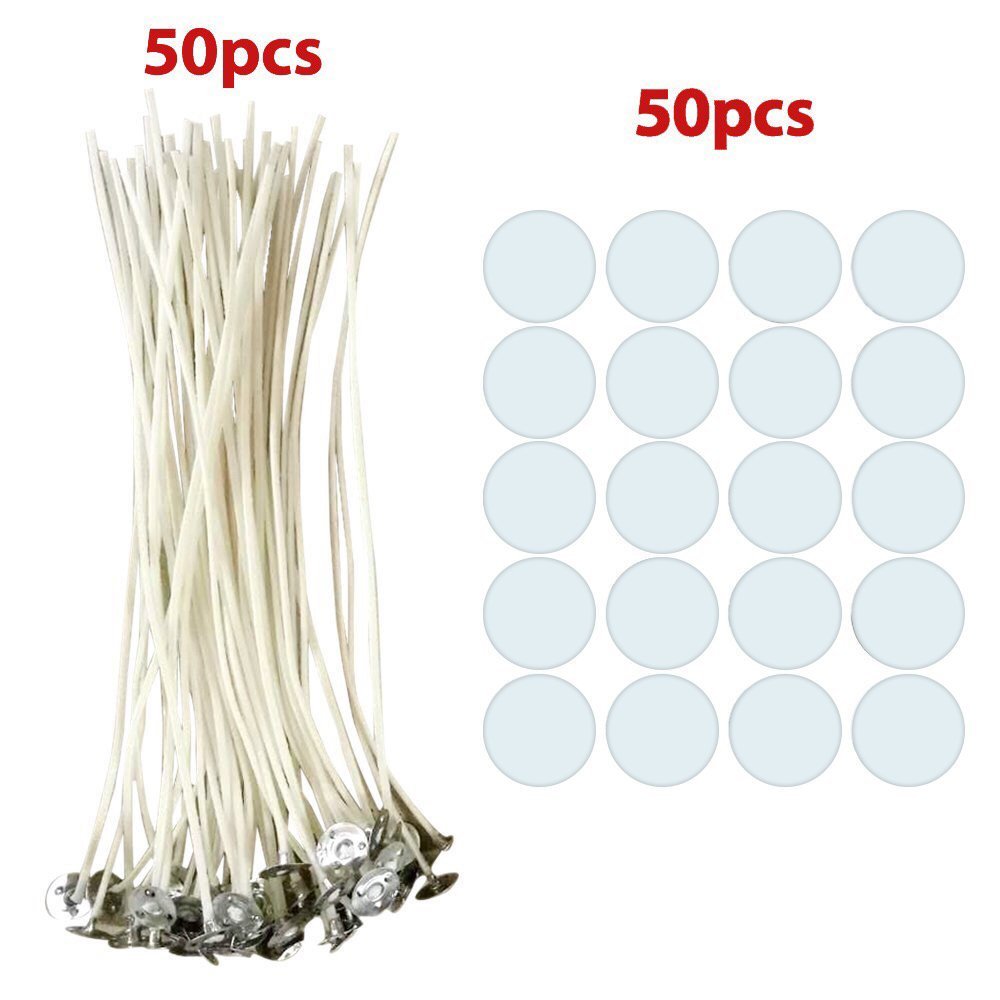
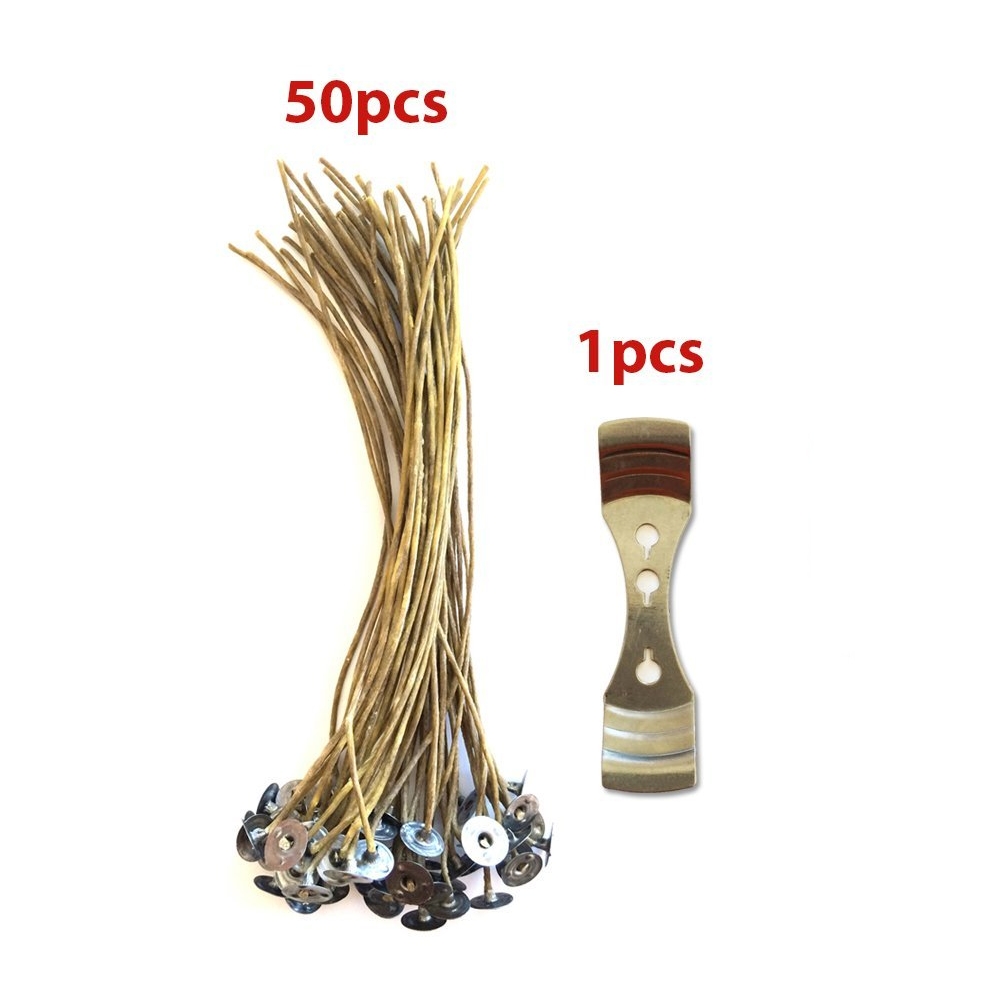
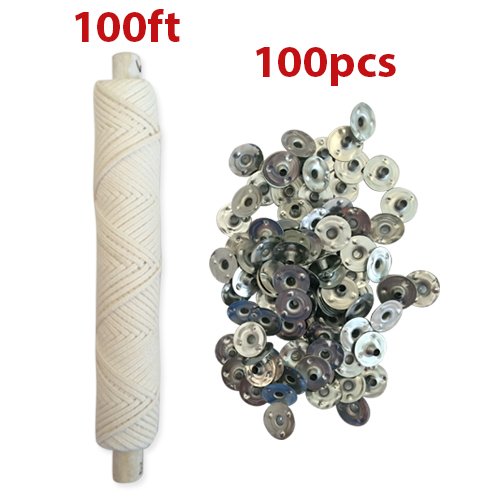
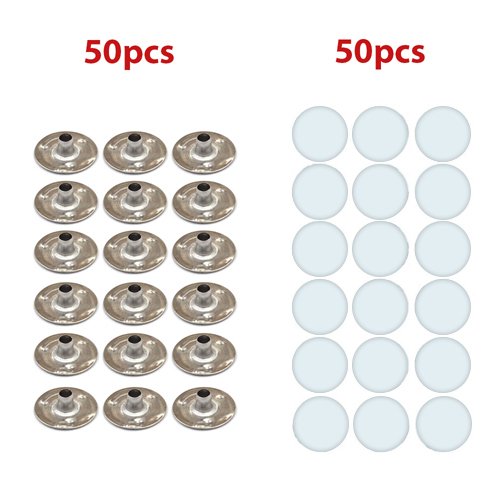
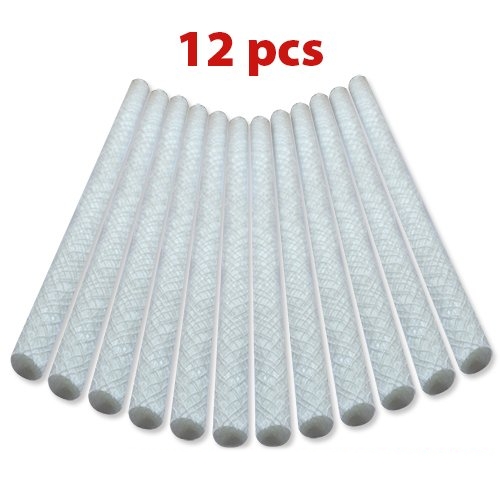
Paraffin-free, contain no lead, zinc or other metals;
Perfect for making your own candles with diameters opening not more than 3 inches;
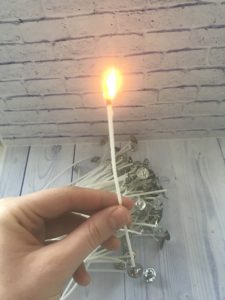
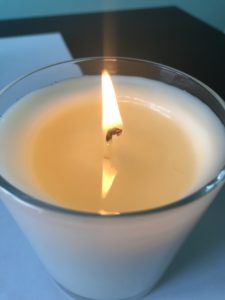
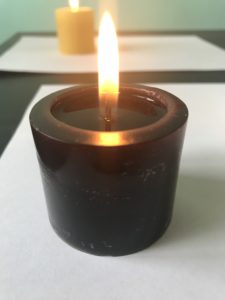
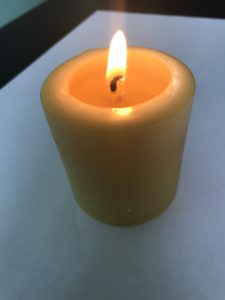
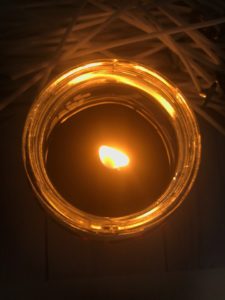
Burn longer, well & safe, the flame is large & stable. Candle flame length is about 0,8″ (2,7cm);
Work with any kind of wax (paraffin, soy, palm wax, beeswax, gel wax).
Have a good burn stability that works well in votives, containers, and pillars.
FAQs
The type of the wick
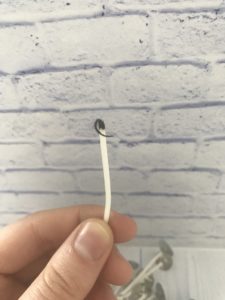
This is 27 ply flat braid cotton wick. Flat braided wicks are very consistent in their burning and curl in the flame for a self-trimming effect. They are the most commonly used wicks, and are often found in taper and pillar candles.
What waxes work well with the wicks?
According to our burn tests, the wick works well in soy wax, paraffin wax, palm wax, beeswax and gel wax.
ALWAYS test new wicks with your wax, fragrance oil, dye or additives.
What size are the wicks?
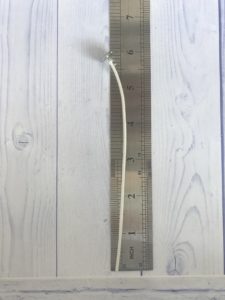
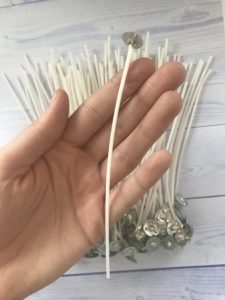
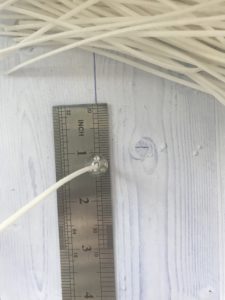
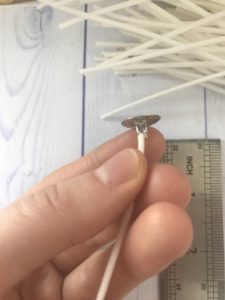
The wick length – 6″ (203mm)
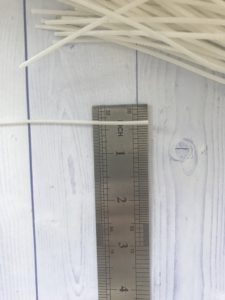
The diameter of the wick – 0.08″ (2 mm)
What containers are the wicks appropriate for?
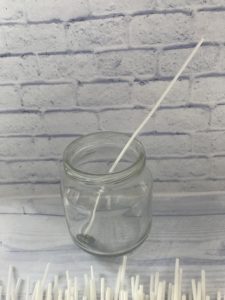
The wicks are perfect for containers with diameter not more than 3 inches and height less than 6 inches.
What type of wax are the wicks coated with?
The wicks are coated with soy wax.
What types of candles are the wicks good for?
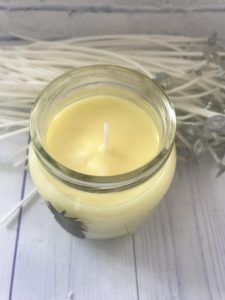
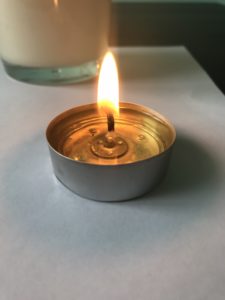
These wicks are good for votives, tealights, pillars and container candles.
Is the wick thick or thin?
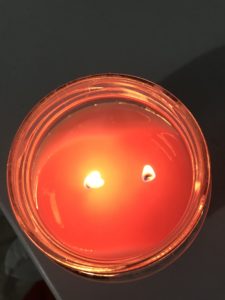
This wick is thin. Its dia is 2mm. You can use two or more wicks in your candle.
The wick doesn't stand up in the wax
These are 100% cotton wicks and they will not stand up straight. You need to use a wick holder and hot glue or a sticker to stick them to the bottom of your container. It always works and the wicks stay in place even after adding the hot wax.
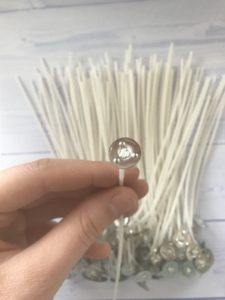
The wicks detach from the metal sustainer tabs
Any wick will become detached from the base if you pour very hot wax. It is important to pour your wax at the right temperature.
The wick curls up
This is a flat braided wick. It curls into the hottest part of the flame. This causes the wick to be self-trimming and to burn cleaner when the proper size is used.
The wick smokes
Small amounts of smoke and soot are natural parts of the burning process. Excess smoke and soot are evidence of an incomplete chemical reaction that could be caused by a variety of factors.
The primary cause of black smoke is an overly long wick. Trimming wicks to between 1/8 inch and 1/4 inch before you light the candle is the easiest way to prevent black smoke.
Another common cause of black smoke is a drafty environment. Keeping your candle flames away from too much moving air will help them burn more cleanly.
Since a candle is a chemical reaction, everything that goes into it can have an impact on how it burns. Check your scents, colors, and other additives.
My candle "tunnels"
The wick is too small for your candle. It will not burn out to the edge of your container but will instead burn down the middle, or ‘tunnel’. Use two or more wicks in your candle.
Hacks and Tips
Different candles need different wicks. That’s why you should always test the wicks before making lots of candles. Test them with your wax, fragrance oils, dye and other additives. If you don’t know how to conduct a basic test burn see here.
Do not trim these wicks very often because they are almost self-trimming. The wick curls and its extremity ends up in the hottest part of the flame where it will eventually carbonize.
If you pour very hot wax the wick can detach from its tab. Use a thermometer and pour your wax at the right temperature.
Use a sticker or hot glue to stick the wick to the bottom of your container.
Use a centering device to secure the wick on top of the container.
If the wick is too small for your candle use more wicks.